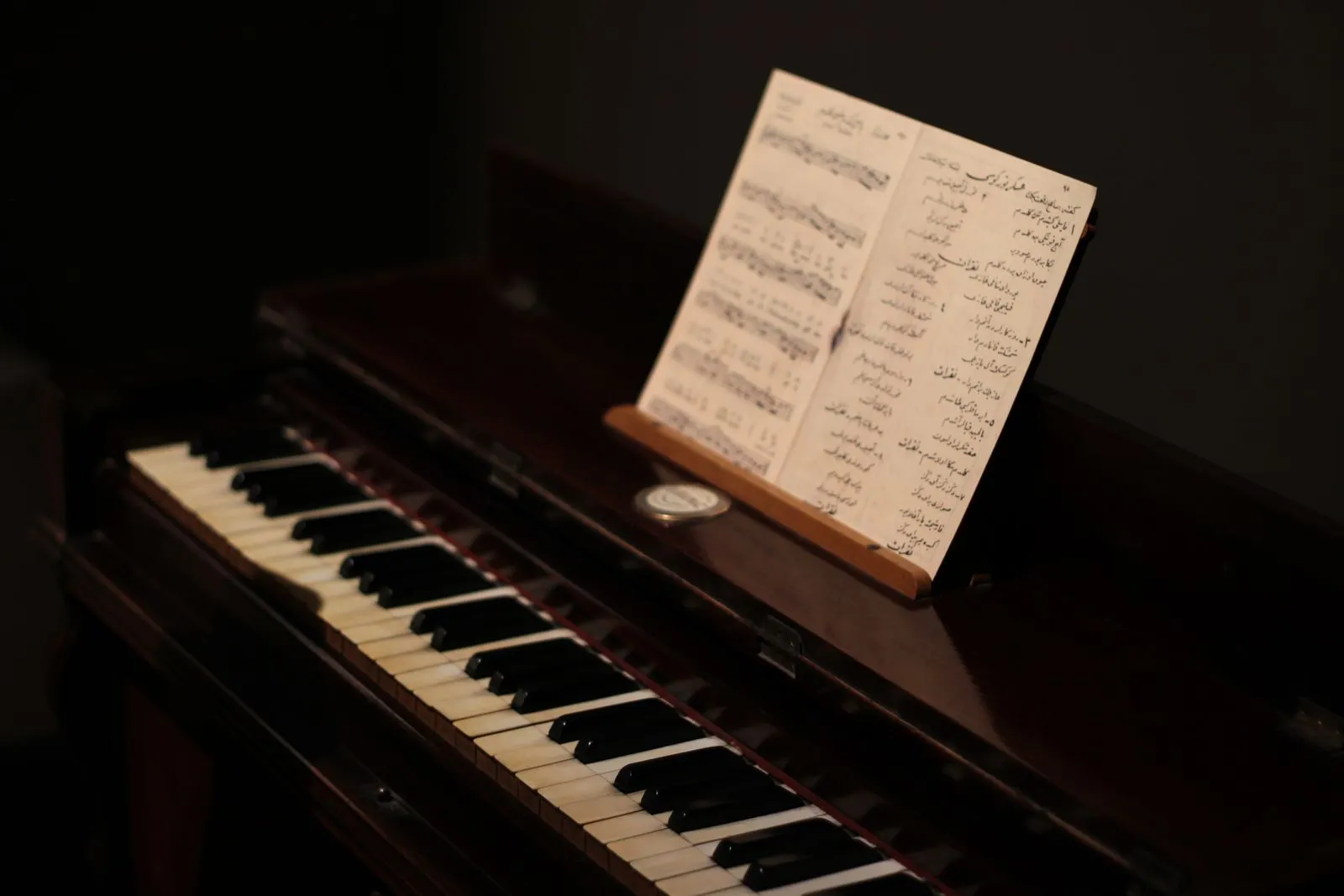
Looking down at your hands can feel like the safest way to find the right keys. But switching your eyes between the page and keyboard interrupts your reading and makes it harder to keep a steady pulse. You can build a more reliable sense of where your hands are by learning the keyboard’s repeating landmarks, setting a clear hand position, and practicing short passages slowly. These steps help connect what you see on the page with what you feel under your fingers.
Use the Keyboard’s Landmarks
Start by noticing the repeating groups of two and three black keys. They make it easier to locate white keys without counting from the end of the keyboard. For example, the white key immediately to the left of a group of two black keys is C. Find several Cs by touch, then locate nearby keys such as D and E by feeling their positions within the group.
Practice finding landmarks with your eyes on a fixed point, such as the music stand. Place one finger on a familiar key, lift it, and return to the same key using touch. Then try a nearby key. Move slowly enough to notice how each key sits relative to the black keys, rather than relying on a quick guess.
Set Your Hand Position First
Before you play a passage, identify its starting notes and place your hands in the intended position. Let your fingers rest lightly on the keys, with a relaxed curve and no unnecessary tension. Knowing where your hands begin gives you a reference point, so you can read the next notes as steps or skips instead of searching for every key from scratch.
Keep your eyes on the music while you check the starting position, then resist the urge to look down during the passage. If you lose your place, pause and reset your hand rather than reaching blindly. A deliberate reset helps you learn the layout and prevents a small mistake from turning into a chain of wrong notes.
Build a Steady Sense of Reach
Practice small movements around a comfortable hand position. Play a short pattern that moves to an adjacent key, then returns. Next, try a skip to a nearby note. Before moving, read the note and notice whether the motion is a step, skip, or repeated note. Keep the movement compact; your wrist and arm should help your fingers travel without stretching or gripping.
For a wider jump, look at the destination note before you move, then guide your hand there by feel. Use the black-key groups as a quiet reference, and allow your hand to move as a relaxed unit when several fingers need to shift. Start with a slow tempo and a short musical phrase. Accuracy and an even pulse matter more than speed.
Practice in Short, Focused Passes
Choose a few measures that stay within a manageable range. First, name or mentally identify the notes and their direction. Next, play slowly while keeping your eyes on the page. If you look down, stop, find the nearest keyboard landmark, and begin again. Repeating a small section gives your hands a chance to learn its distances without overwhelming your attention.
Try playing hands separately before combining them, especially when one hand makes larger leaps. You can also pause between phrases to check your hand position and relax your shoulders. Keep a simple note of where your eyes tend to drop, such as during a leap or a shift. That tells you which movement to practice on its own.
Reading without watching your hands comes from building dependable reference points, not from guessing. Use the black-key groups, establish your starting position, and practice short movements at a comfortable pace. When a passage feels uncertain, slow down and isolate the shift. For guided practice with piano sight-reading, contact Boulder Read Piano to discuss your learning goals.